
Gamification is the use of game elements in non-game contexts to make activities more engaging, motivating, and enjoyable. In simple terms: it means turning normal tasks into something that feels more like a game.
The idea behind it
Games are incredibly good at keeping people motivated. They use things like:
- Goals, clear objectives to reach
- Rewards, points, badges, achievements
- Progress, levels or visible improvement
- Challenges, tasks that feel rewarding to complete
- Competition or collaboration, leaderboards or teams
Gamification takes these elements and applies them to areas like work, education, health, or marketing.
Real-world examples
Learning
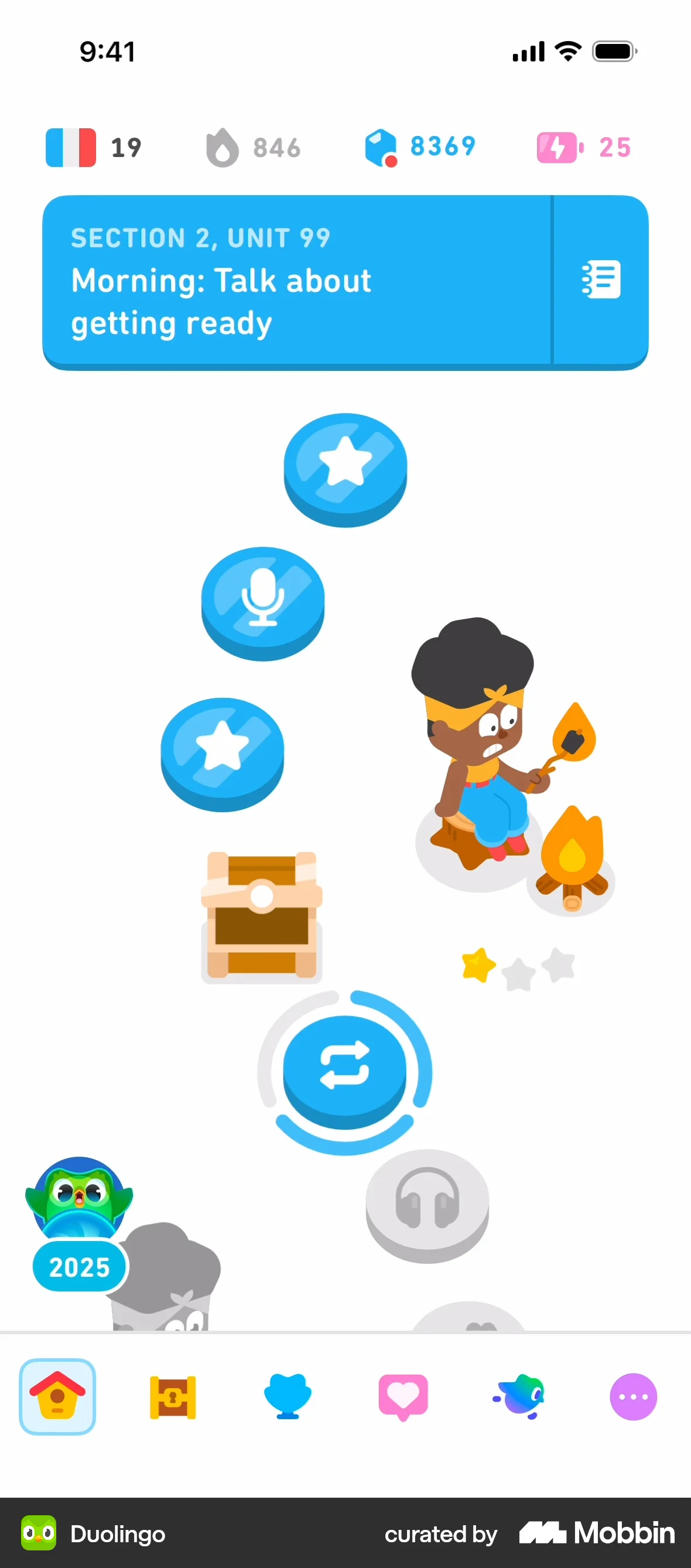
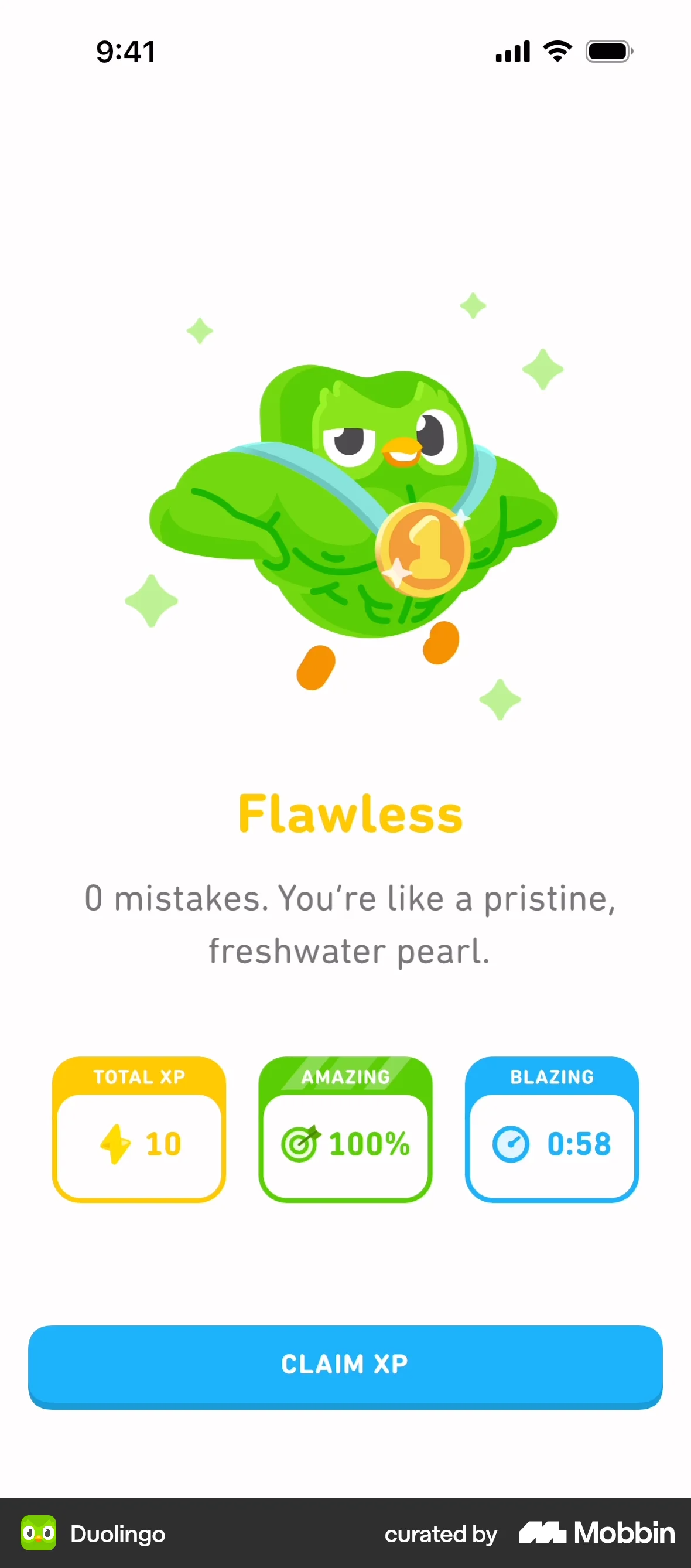
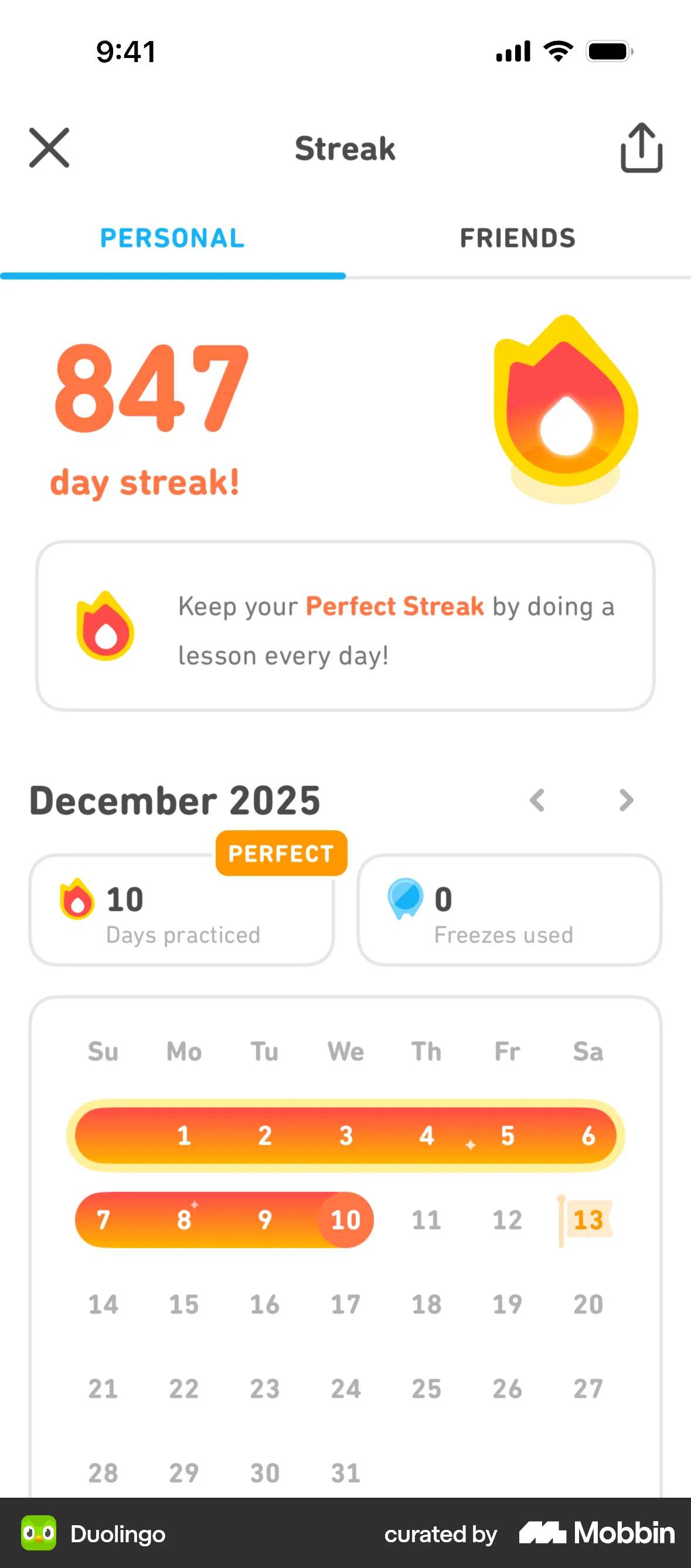
Language apps like Duolingo use streaks, levels, and XP points. This makes studying feel like progressing in a game.
Work
A sales team might get points for closing deals, a leaderboard to track performance, and monthly challenges. This motivates performance through friendly competition.
Fitness
Apps like Strava use badges, personal records, and social competition. This encourages people to exercise more by making progress visible and social.
Why gamification is everywhere in apps
Gamification is especially popular in digital products because it's relatively easy to implement and incredibly effective. A progress bar here, a checklist there, and suddenly users are far more engaged.
A great example is LinkedIn. When you create a new account, LinkedIn guides you through completing your profile using classic gamification techniques: a profile completion bar that fills up as you add information, to-do items that get ticked off one by one, and prompts that encourage you to take the next step. You're not playing a game, but the experience taps into the same psychology: we like seeing progress, completing tasks, and reaching 100%.
This is why so many apps use gamification. It doesn't require building a full game, just applying the right elements to make an existing experience more motivating.
The gamification formula
You could summarize gamification as:
Motivation + Progress + Challenge + Reward = Gamification
The deeper goal
Good gamification is not just about adding points or badges. It tries to tap into fundamental human motivations:
- Achievement, the desire to accomplish something meaningful
- Curiosity, the drive to explore and discover
- Competition, the thrill of measuring yourself against others
- Mastery, the satisfaction of getting better at something
- Social connection, the need to belong and collaborate
Three levels of understanding gamification
1. The simple definition
Gamification is using elements from games, like points, levels, challenges, rewards, and progress bars, to make normal activities more engaging and motivating.
Example: A language app gives you points and streaks to motivate you to keep learning.
2. The practical definition
Gamification is the design of tasks, learning, or work environments so they feel more like a game, with clear goals, visible progress, and motivating challenges.
Key elements usually include:
- Clear goals, you know what you are trying to achieve
- Progress, you can see improvement over time
- Challenges, tasks that require effort but feel rewarding
- Feedback or rewards, recognition of progress
Example: A workshop where teams complete missions, unlock new tasks, and compete for the best solution.
3. The advanced definition
Gamification is the intentional use of game design principles and motivational psychology to influence behavior and increase engagement in non-game contexts. This includes things like intrinsic motivation (curiosity, mastery, autonomy), behavioral feedback loops, challenge vs. skill balance, and social dynamics.
Gamification vs. serious games
Gamification and serious games are related but different. Serious games are standalone games built from the ground up with a learning objective, like a simulation or an escape room workshop. Gamification is about taking something that already exists, like a management tool, a meeting, or a training program, and making it more engaging by adding game elements.
Think of it this way: a serious game replaces the experience entirely with a game. Gamification enhances an existing experience by tapping into how we're naturally wired, like our desire to see progress, complete challenges, and feel a sense of achievement.
Want to learn more?
Curious how gamification can work for your team or organization? Get in touch and let's explore the possibilities together.